


By contributing writer Peter Valdes-Dapena
Mattel plays in just about every corner of the toy business, from dolls to cars to card games. However, one major competitor it has largely avoided tackling head-on is Lego.
Mattel MAT 0.00%↑ does offer its own line of building blocks called Mega Bloks, aimed at kids five and under, similar to Lego’s Duplo blocks for younger consumers.
But until recently, Mattel had little to offer older kids—and adults—who were ready to graduate to more complex building kits. Late last year, the toymaker debuted Brick Shop Hot Wheels kits to fill that void.
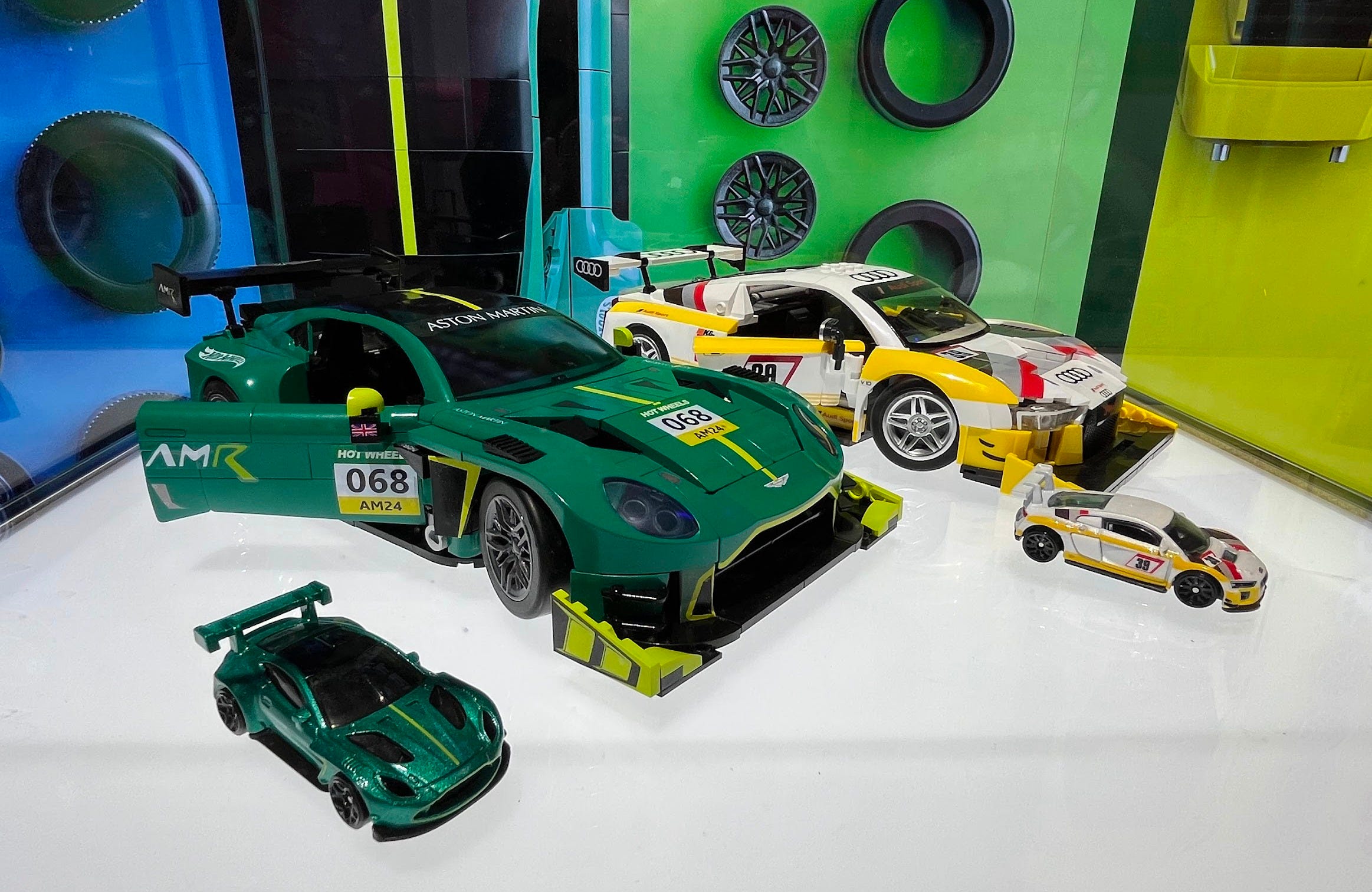
At Toy Fair New York this month, Mattel gave an up-close look at the full range of its Brick Shop Hot Wheels cars and trucks.
While the Hot Wheels kits invite comparisons to Lego’s Technic car sets, the most noticeable difference is that Hot Wheels kits appear more lifelike. The Brick Shop cars feel more like detailed snap-together model kits, with smoother, flowing shapes and fewer large gaps between pieces.

That realism comes with a trade-off.
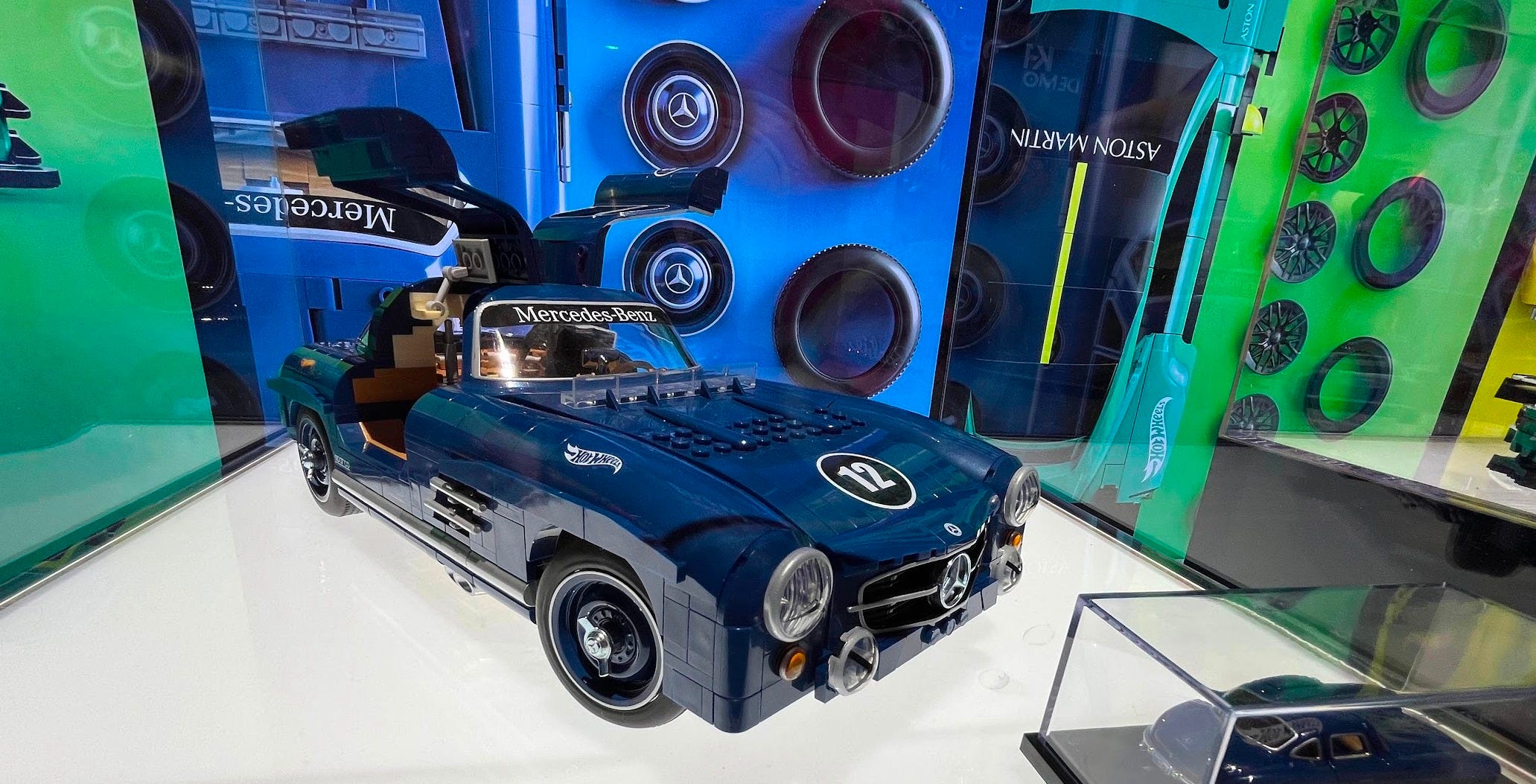
Many Brick Shop pieces are very specific and offer limited flexibility for reuse. A one-piece Mercedes SL Gullwing door, for instance, is just a Gullwing door—there’s not much else a builder can do with it.
Instead, flexibility comes from Hot Wheels’ emphasis on customization. Brick Shop kits come with decals and optional parts for builders to change the look and character of a vehicle.
The recently introduced Aston Martin Vantage GT3, for example, can be assembled to emphasize the car’s elegant lines or fitted with aerodynamic add-ons for a more aggressive, race-ready appearance. Mattel also highlights the inclusion of select metal components, such as a small die-cast plaque that bolts onto the underside of the car as a final flourish.
Brick Shop cars are less about engineering spectacle than Lego Technic sets, which tend to be highly mechanical, often featuring working internal systems. The recently announced Lego Technic McLaren MCL39 F1, for instance, includes a functioning drag reduction system in its rear wing, mirroring the real Formula 1 car.
Mattel’s Brick Shop models do feature some moving parts—such as a working steering wheel on the Aston Martin—but they stop short of complex mechanicals.
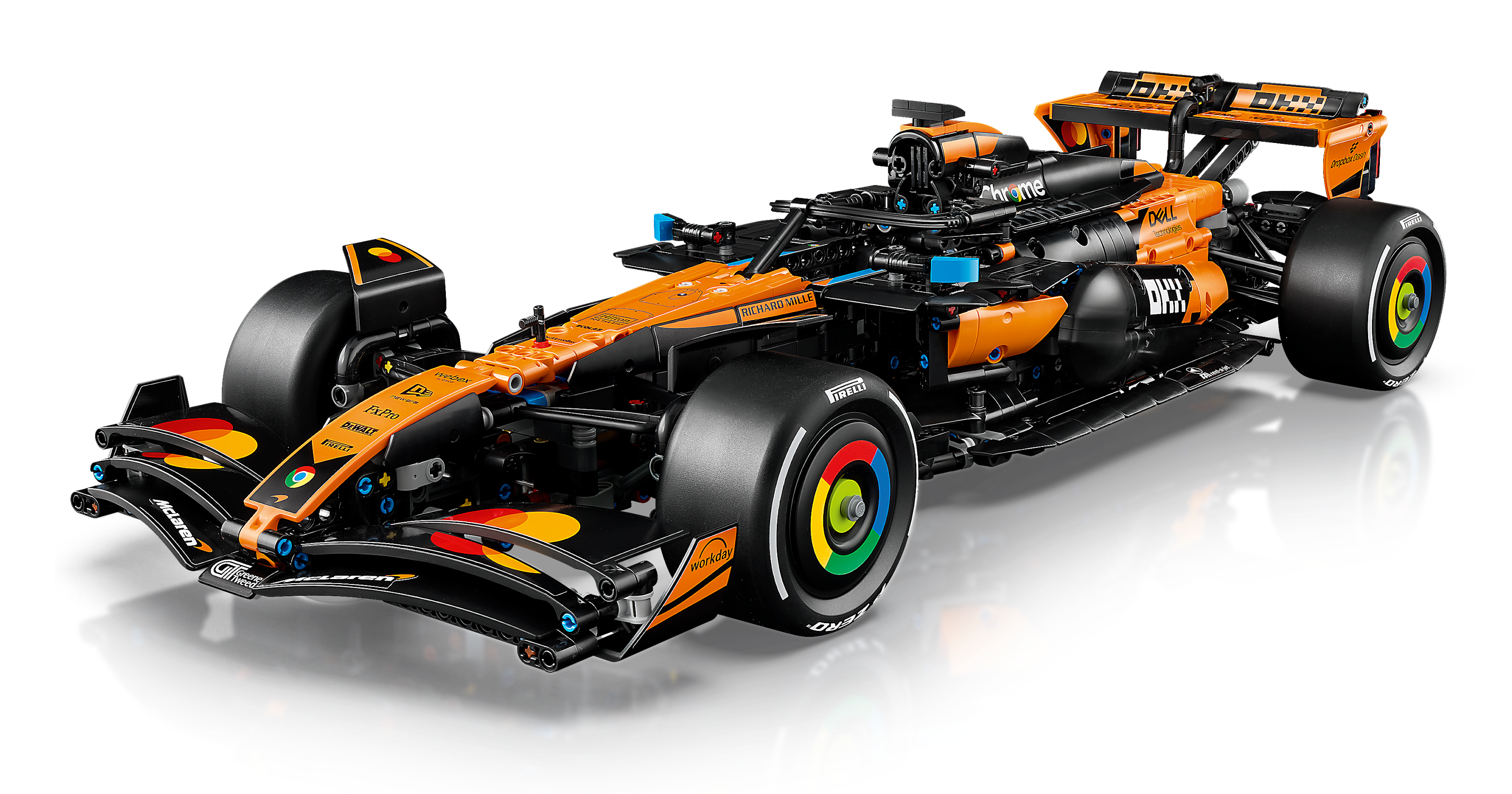
Price is another point of contrast. Many Lego Technic sets sell closer to $65 (the McLaren F1 Technic kit is closer to $230), while Hot Wheels Brick Shop products are offered in three tiers of price and complexity: Speed, with the smallest and simplest builds; Elite, and Premium ( for the largest and most detailed models). Shoppers spend about $20 on a 1:32-scale Audi Avant RS2, or around $130 for a 1:12-scale Mercedes-Benz 300 SL Gullwing.

Each Brick Shop kit comes with a matching classic Hot Wheels die-cast car.
Still, given the breadth of LEGO Technic—which spans everything from construction equipment to a model of the Earth-Moon system—it could be very likely that Brick Shop will eventually branch out beyond Hot Wheels cars.
—Peter Valdes-Dapena has covered cars, the auto industry, and auto-related companies and products. He has also been a lifelong collector of automotive miniatures.