

Why I left my smartwatch charger behind before flying to Cannes

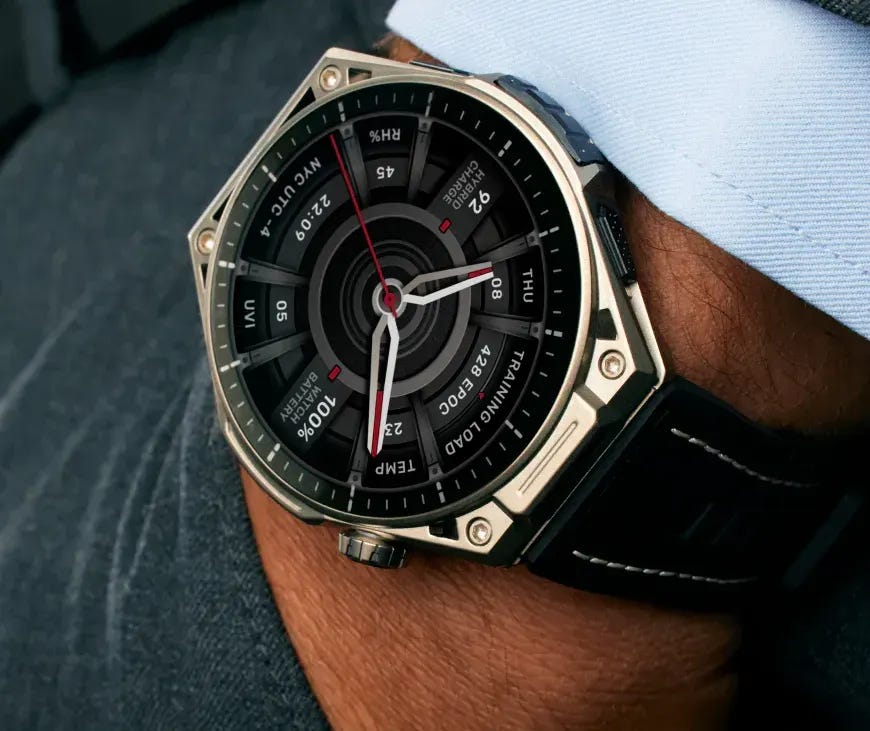
By contributing writer Frank Kavilanz
I just got back from a sweltering hot week in Cannes in the south of France and I traveled there and back to New York City without taking one essential item with me — my smartwatch charger.
I did this on purpose, and not because I forgot it. I wanted to see whether a smartwatch designed for serious athletes could adapt just as well to the needs of a busy business traveler.
For nearly a century, the world’s most celebrated watches have been purpose-built tools. The Rolex Submariner was engineered for divers. The Rolex GMT-Master helped Pan Am pilots track multiple time zones. The Omega Speedmaster became the first watch worn on the Moon. The TAG Heuer Monaco earned its place in motorsport history.
Ironically, most collectors who covet these watches have never explored the ocean floor, flown a commercial jet, orbited Earth, or driven professionally. They collect these mechanical time-telling masterpieces because they admire their engineering, craftsmanship, and problem-solving innovations.
It made me wonder what that idea looks like in the smartwatch era.

So before flying from New York to the Cannes Lions International Festival of Creativity, I intentionally left behind at home the charger for the Amazfit Balance Ultra.
The watch was designed primarily for hybrid athletes balancing training, recovery, and everyday life.
I’m not that customer.
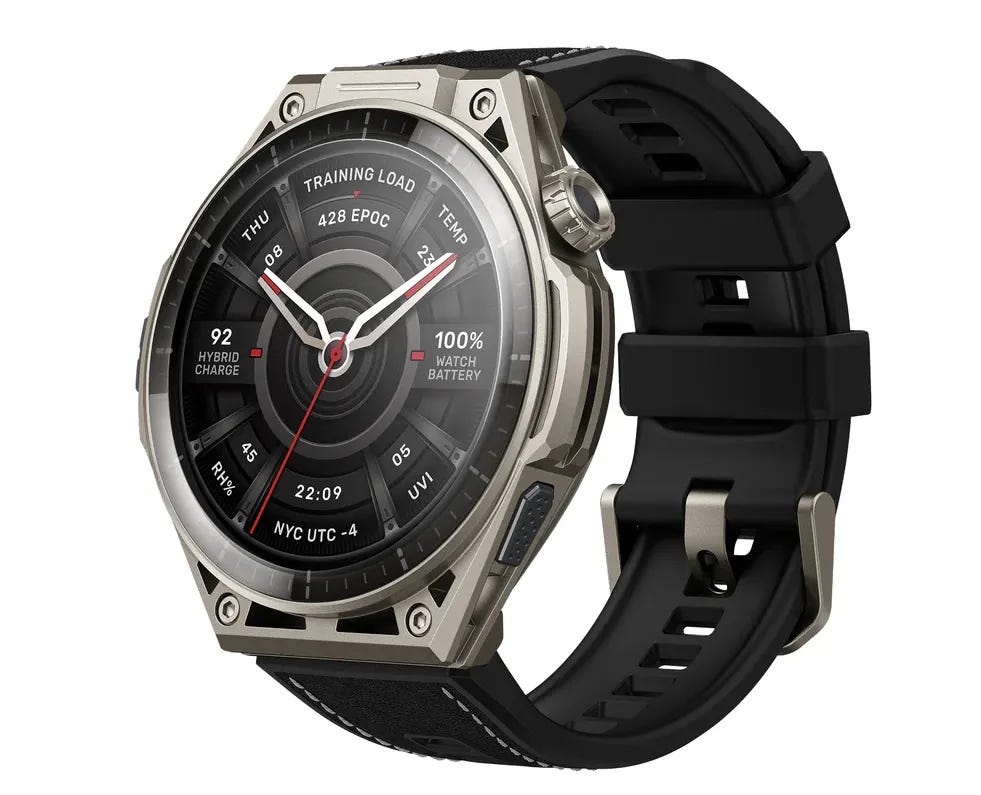
I’m someone who spends more time navigating airports, convention centers, hotel lobbies, and conference rooms than rigorous mountain trails. But I appreciate thoughtfully-engineered watches, and I wanted to know whether a watch designed for athletic performance could become the modern tool watch for a global business traveler.

For seven days, the Balance Ultra became my only watch and I put it to the test.
In that one week in Cannes, I walked incessantly to multiple meetings separated by 15-to-20 minute walks in the scorching Mediterranean heat. I power walked to a roundtable event at one hotel, then to a beachfront panel discussion, followed by several talks and more meetings.
The evening itinerary was just as active — rooftop receptions, yacht events, and dinners — where a watch has to look as comfortable under a linen blazer as it does with a polo shirt.
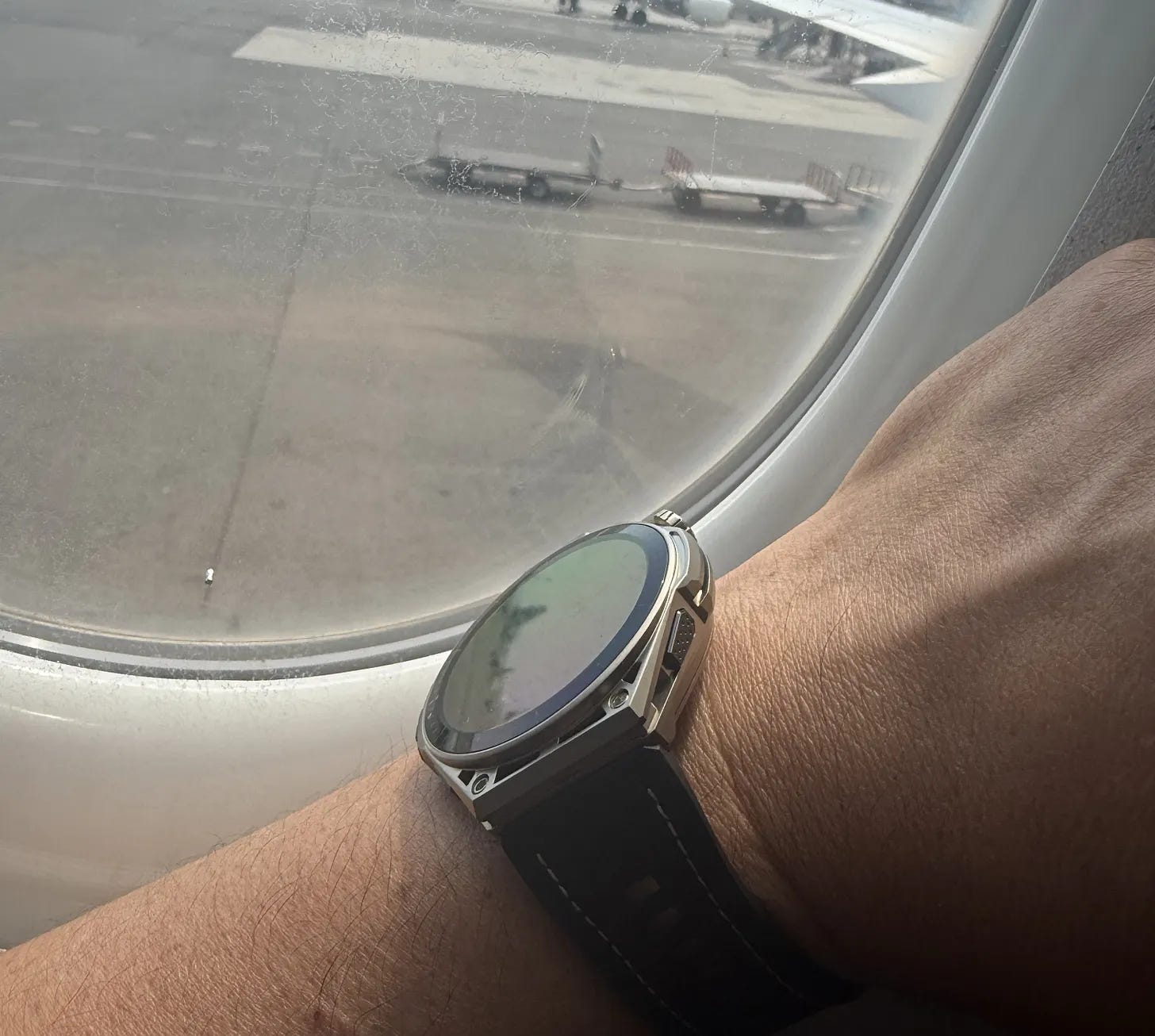
By the end of most days, I had logged over 15,000 steps.
During the day, I relied on the Amazfit Balance Ultra’s large round display for message previews and navigation as I hurried between meetings. At night, I found myself using features I hadn’t expected to appreciate, including monitoring the quality of my sleep.
Before leaving for France, I also used the Jet Lag Manager, which creates a personalized plan to help travelers adjust to a new time zone through recommendations on sleep, light exposure, activity, and caffeine timing.
After long flights and packed schedules, I even found myself checking blood oxygen levels—not as a medical tool, but as another way to understand how my body was recovering from the demands of international travel.

Then there was the battery.
Amazfit says the Balance Ultra can last up to 30 days on a single charge, so I left my charger at home. My VRBO only had two electrical outlets in my bedroom, and I had packed two travel power adapters. Unsurprisingly, my phone and laptop took priority.
My watch never required a charge. Seven days later, I flew home with battery to spare.
I already own a collection of mechanical watches and an Apple Watch. The Amazfit Balance Ultra isn’t about replacing any of them. It’s about adding another option.
In a sea of Rolexes and Apple Watches at Cannes, it was refreshing to wear something different—something that looked like a traditional watch, went with me on a dip in the Mediterranean and emerged unscathed, and never competed with another device for an available outlet.

The great tool watches of the last century weren’t defined by luxury. They earned their reputation because they solved real problems for people who depended on them. After a week in Cannes, this is a smartwatch that earned something arguably more difficult: a permanent place in my travel bag.
ABOUT THE AUTHOR: For more than 25 years, Frank Kavilanz has worked for, and advised companies, across media, technology, and advertising industries. He is also the co-founder and CEO of Masterkeys AI, co-founder of Bagable Media, and a frequent business traveler whose work takes him to meetings and industry events across the U.S. and overseas.