


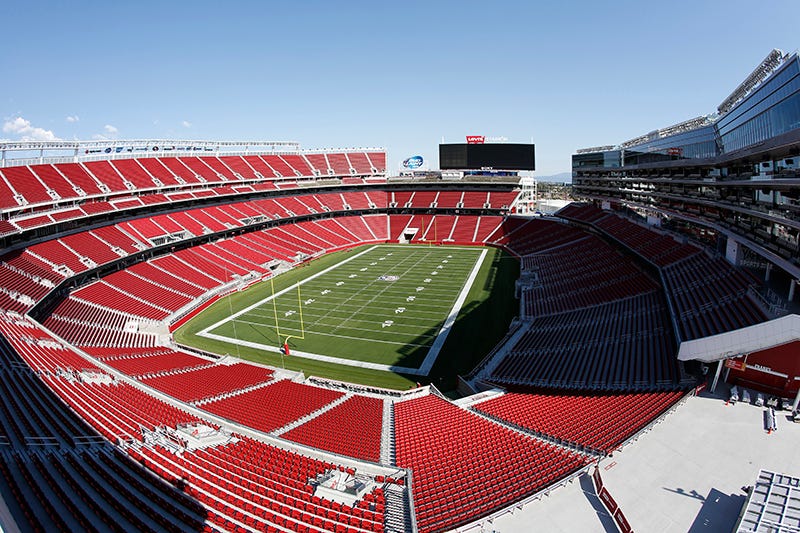
As the New England Patriots and the Seattle Seahawks square off on Sunday Feb. 8 for Super Bowl LX, the host city of Santa Clara, California (in the San Francisco Bay Area) has already scored the first touchdown of football’s biggest event.
Blockbuster sporting events, such as NFL home games and the Super Bowl, attract massive fanfare, bringing hordes of spectators, truckloads of food and all kinds of businesses to entertain the crowds for the Big Game.
It’s a big boost to the local economy. This year's game will be held at Levi's Stadium in Santa Clara, home of the 49ers. The last time the venue hosted the event in 2016, San Francisco reported an influx of more than a million visitors, according to a new Bank of America Institute report that analyzed the economic impact of football’s biggest event on host cities.
Here’s how local economies score:
“Attendance [at the games] is not the only way that the sport impacts the overall economy. Many fans watch the game from their sofa – and pay via cable and streaming – while others watch in local bars and restaurants, spurring spending there,” the report said.
Game day spending: On NFL game days, in the zip codes where stadiums are located, total credit and debit card spending rises by around 77%, according to Bank of America internal data. The biggest increases are in food and drinks, parking and lodging, according to the report.
Looking at the Big Game itself, the report studied whether a Super Bowl generates an additional spending bump both in the stadium and surrounding area, over and above the usual positive game day impact.

The analysis found a positive effect on spending in five of the past nine Super Bowls, with a median boost of 7% on top of the usual game day impact.
“Our previous analysis of the 2024 Super Bowl LVIII in Las Vegas found significant boosts to retail spending from visitors during Super Bowl weekend, particularly on alcohol and sporting goods,” the report said.
Bay Area impact: The last time Levi’s Stadium hosted the Super Bowl (In 2016), the event generated about $240 million in economic impact to the city.
Small businesses, especially, stand to benefit from increased local spending tied to the the Super Bowl. A separate Bank of America Business Owner Report from 2025 found that of the 58% of business owners that modify their business plans during major cultural events like sports games and concerts, over half of them experienced increased sales and one-third saw more foot traffic, either in-store or online.
“When businesses lean into these moments – whether by hiring more, adjusting inventory, or offering targeted promotions – they have the potential to capture the benefits of a Super Bowl-sized boost with both residents and visitors,” the latest report said.
Meanwhile, iconic American denim brands Levi Strauss & Co. LEVI 0.00%↑ is capitalizing on Super Bowl LX being in its hometown to celebrate the moment with fans through several events. These include music events showcasing Bay Area artists and sounds and the debut of limited-edition sneaker and clothing releases merging sport and fashion with local flair.
More stories:


